Horses sleep in a fascinating way: they can doze standing up thanks to a special locking mechanism in their legs, but they must lie down for deep, restorative REM sleep. A horse only needs a few hours of sleep a day, taken in short naps around the clock rather than one long stretch — a habit left over from life as a prey animal that needed to stay ready to flee.
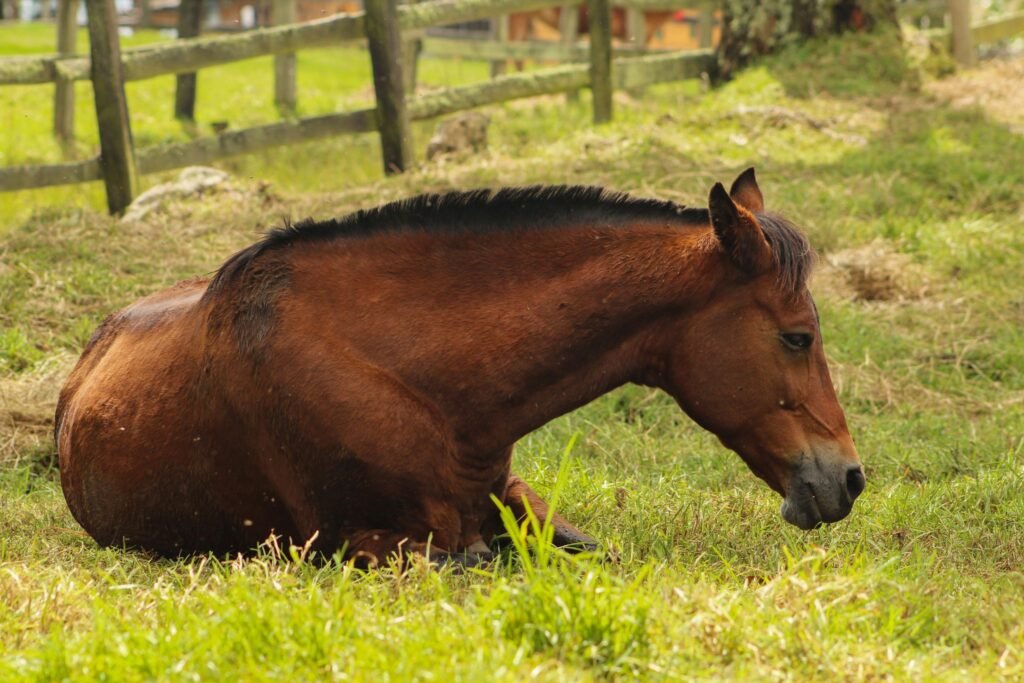
Horses are polyphasic sleepers, meaning they sleep in many short bouts across the day and night rather than one long block. In total they need only around three hours of sleep in 24, though they spend far longer dozing lightly. Most of that light dozing happens standing up; the deeper sleep that keeps them healthy happens lying down.
Horses have a stay apparatus — an arrangement of tendons and ligaments that lets them lock their legs and rest their weight with almost no muscular effort. This lets a horse doze on its feet without collapsing, and meant a wild horse could rest while staying ready to run from danger in an instant. You will often see a resting horse cock one hind leg and drop its lower lip — that is light standing sleep.
A horse that cannot or will not lie down — because of pain, an unsafe environment, or no comfortable place — can become REM-sleep deprived. Signs include sudden buckling or near-collapse while standing. If you see this, look at comfort and pain first: is the footing safe and dry, is there enough space, and could arthritis or another source of pain be stopping the horse lying down? A veterinarian can help rule out medical causes.
Give horses a safe, dry, comfortable place to lie down, enough space, and calm herd company so they feel secure enough for deep sleep. Older horses especially benefit from soft footing — see caring for the senior horse. Good rest, like good nutrition, is a quiet foundation of health.
General information only. Horse Care Finder provides practical, educational guides for horse owners. This content is not a substitute for professional veterinary, medical, legal or other qualified advice. Any prices shown are general estimates that vary by location, provider and circumstances. See our Editorial Policy and Disclaimer.
Horses sleep in short bouts throughout the day and night. They doze lightly standing up and lie down for deep REM sleep. They need only about three hours of sleep in 24.
Yes, for light sleep. A stay apparatus in their legs lets them lock their joints and doze on their feet without effort. But they must lie down for deep REM sleep.
Yes. Horses must lie down for REM sleep because it requires full muscle relaxation. They typically need only 30 to 60 minutes of lying-down sleep a day and only do so when they feel safe.
Horses need only around three hours of true sleep per day, taken in many short naps, though they spend much longer dozing lightly on their feet.
A horse may avoid lying down due to pain, unsafe or wet footing, lack of space, or feeling insecure. Persistent avoidance can cause sleep deprivation, so check comfort and consult a vet.