Winter is less about dramatic intervention and more about getting a few fundamentals consistently right before the weather turns.
Digesting fibre generates heat. Extra hay overnight does more to keep a horse warm than any blanket. When a cold snap arrives, the correct response is more forage, not more grain.
Cold-weather colic is very often a water problem. Horses drink less when water is icy, and less water combined with dry winter hay is a recipe for impaction. Keep it unfrozen and palatable, and offer loose salt to encourage drinking.
Horses tolerate cold far better than wet and wind. A dry place out of the wind matters more than warmth. Keep them moving rather than stalled for days — turnout beats box rest for gut motility and for legs.
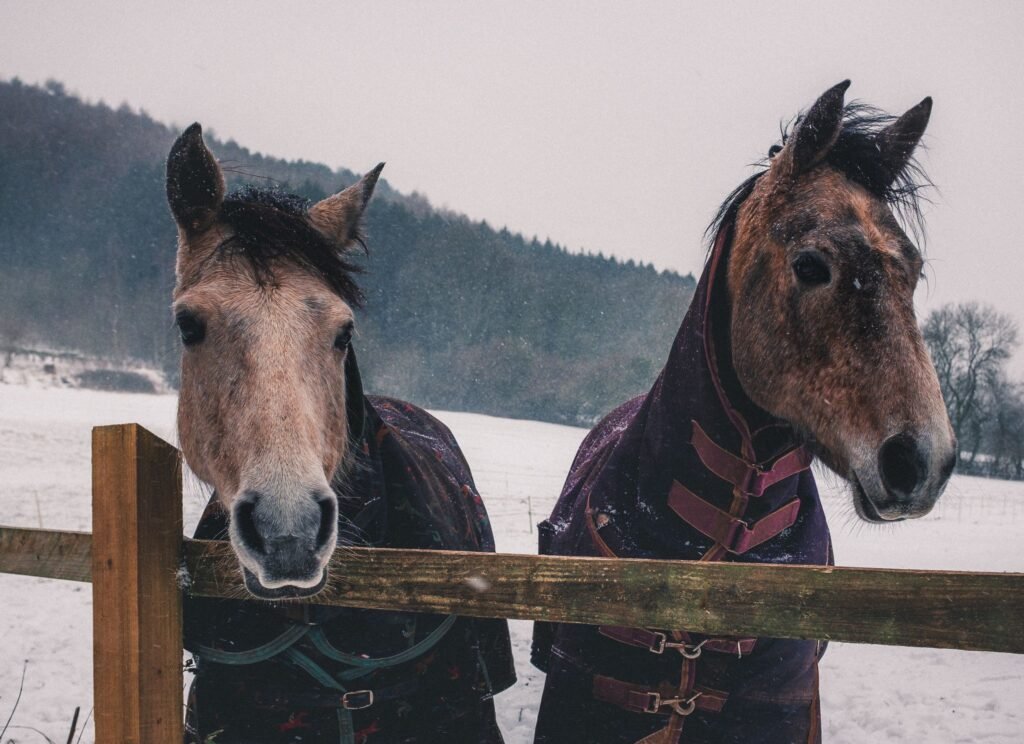
It depends on coat, shelter, age and whether the horse is clipped. Many unclipped horses with shelter are more comfortable unblanketed than owners expect.
Tank heaters or heated buckets, checked daily. Horses drink less when water is icy, and less water plus dry hay causes impaction.
No — feed more hay. Fibre fermentation in the hindgut generates heat. Grain does not warm a horse the way forage does.
With your hands, not your eyes. Feel the ribs and topline weekly. A thick coat or a blanket hides weight loss until it is significant.
Related: caring for the senior horse.
General information only. Horse Care Finder provides practical, educational guides for horse owners. This content is not a substitute for professional veterinary, medical, legal or other qualified advice. Any prices shown are general estimates that vary by location, provider and circumstances. See our Editorial Policy and Disclaimer.
It depends on coat, shelter, age and whether the horse is clipped. Many unclipped horses with shelter are more comfortable unblanketed than owners expect.
Tank heaters or heated buckets, checked daily. Horses drink less when water is icy, and less water plus dry hay causes impaction.
No — feed more hay. Fibre fermentation in the hindgut generates heat. Grain does not warm a horse the way forage does.
With your hands, not your eyes. Feel the ribs and topline weekly. A thick coat or a blanket hides weight loss until it is significant.