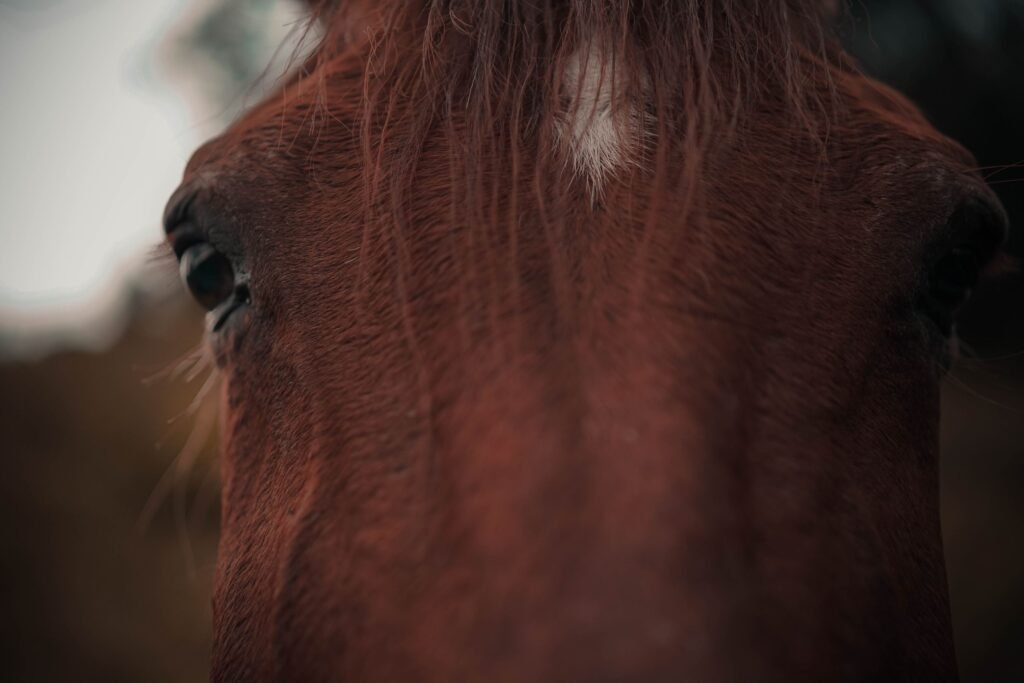
Horses are prey animals. Concealing weakness is instinct, which means the horse showing obvious pain has usually been uncomfortable for a while.
Learn to read tension: ears held back or stiffly sideways, tightening above the eye, a strained muzzle, flared nostrils, a clenched jaw. Researchers have formalised this as the horse grimace scale, and it is worth learning properly.
A horse that has become difficult is far more often in pain than in a mood. Before you reach for a training solution, rule out the physical one. Saddle fit, teeth, feet and back are the usual suspects, and a vet is the right place to start.
A few minutes of observation makes the phone call far more useful. Take the temperature, which normally sits around 99 to 101 degrees Fahrenheit. Count respiration at rest. Feel for a digital pulse at the fetlock, because a pulse you can feel strongly, especially in both front feet, matters. Check whether the horse has passed manure and whether the water level has dropped. Look at the gums: pale pink and moist, with colour returning within about two seconds after you press.
Describe change rather than diagnosis. When you last saw the horse normal, what is different now, whether it is worsening and how quickly, plus the numbers above. Saying the horse is off starts a slow conversation. Saying he was fine at six, he is pawing and looking at his flank now, temperature normal, no manure since morning, starts a fast one.
Yes, and they are good at it. As prey animals they mask weakness. Subtle behavioural change is often the only early sign.
A research-backed method of reading facial tension — ears, eyes, muzzle, nostrils — to assess pain. It is genuinely useful once you learn it.
Not always, but it is the first thing to rule out. Sourness under saddle is more often physical than attitudinal.
If you see acute signs, or a subtle change that persists more than a day or two. Describing what is different is enough to start the conversation.
General information only. Horse Care Finder provides practical, educational guides for horse owners. This content is not a substitute for professional veterinary, medical, legal or other qualified advice. Any prices shown are general estimates that vary by location, provider and circumstances. See our Editorial Policy and Disclaimer.
Yes, and they are good at it. As prey animals they mask weakness. Subtle behavioural change is often the only early sign.
A research-backed method of reading facial tension — ears, eyes, muzzle, nostrils — to assess pain. It is genuinely useful once you learn it.
Not always, but it is the first thing to rule out. Sourness under saddle is more often physical than attitudinal.
If you see acute signs, or a subtle change that persists more than a day or two. Describing what is different is enough to start the conversation.