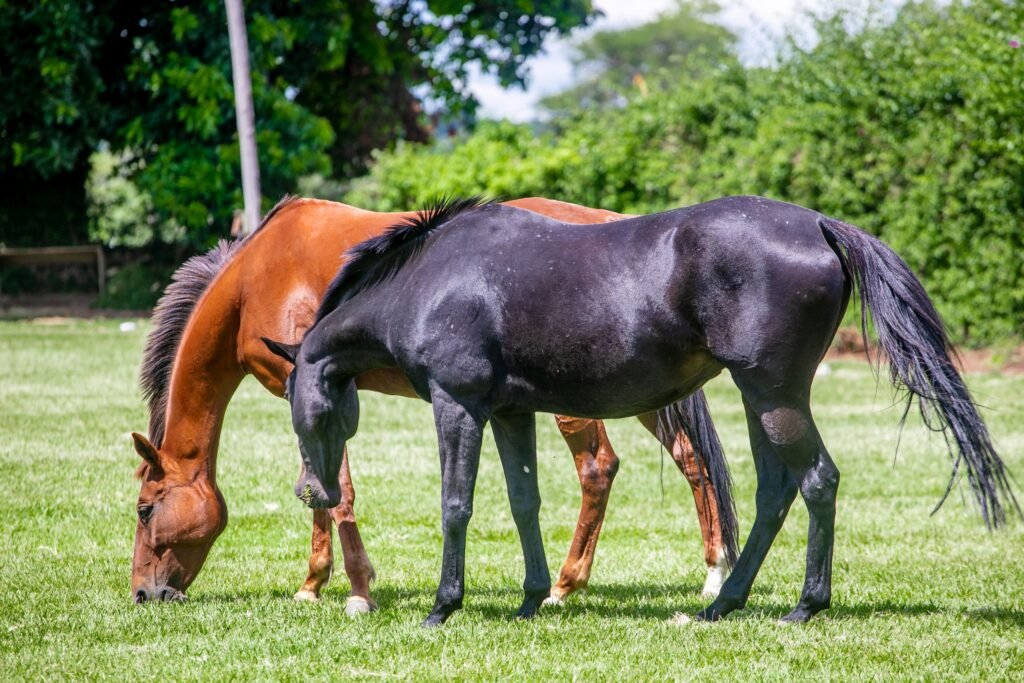
Horses are grazing herbivores built to eat small amounts of fibrous forage almost constantly. The foundation of every horse diet is grass and hay — forage — supplemented as needed with grain or concentrates, plus fresh water and salt. Their digestive systems are designed for a steady trickle of fiber, not large infrequent meals, which is why how you feed matters as much as what you feed.
The natural, healthiest diet for a horse is forage: pasture grass and good-quality hay. Most horses can meet the majority of their needs on forage alone. Grain and commercial feeds are added only when a horse needs more energy than forage provides — for hard work, growth, pregnancy or to hold weight. A forage-first approach keeps the gut healthy and reduces the risk of colic and other problems.
Most horses enjoy carrots and apples in moderation as treats. Avoid lawn clippings, moldy hay, large amounts of fruit, and human snacks — and never make sudden changes to the diet. Any change in feed should be made gradually over a week or more to protect the gut. When in doubt about what is safe, ask your feed supplier or vet.
Good feeding is about consistency and condition, not just quantity. Learn to body condition score your horse so you can adjust before problems appear, and start with our basic nutrition guide. For an overweight or metabolic horse, careful forage management also lowers the risk of laminitis.
General information only. Horse Care Finder provides practical, educational guides for horse owners. This content is not a substitute for professional veterinary, medical, legal or other qualified advice. Any prices shown are general estimates that vary by location, provider and circumstances. See our Editorial Policy and Disclaimer.
Horses are herbivores whose diet is based on forage, meaning grass and hay. Grain or concentrates are added only when needed, alongside fresh water and salt.
A horse should eat about 1.5 to 2 percent of its body weight per day in dry forage. Exact amounts depend on size, workload and condition.
Yes, in moderation. Carrots and apples are popular, safe treats. Avoid large amounts of fruit, lawn clippings, moldy hay and sudden diet changes.
Not always. Many horses do well on forage alone. Grain is added only when a horse needs extra energy, such as for hard work, growth, pregnancy or to maintain weight.
A typical horse drinks about 5 to 10 gallons of clean water per day, and more in hot weather or heavy work. Water should always be available.