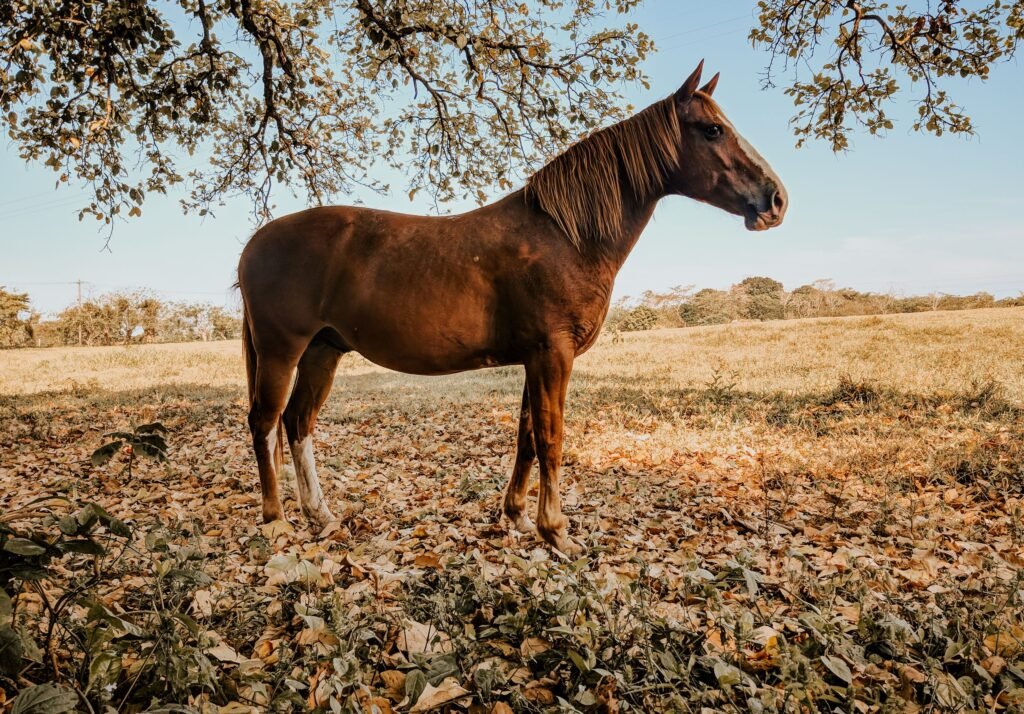
Body condition scoring is the simplest, most useful skill an owner can learn for managing a horse’s weight. Instead of guessing, you assess fat cover at key points on the body and assign a score. The most widely used system, the Henneke scale, runs from 1 (emaciated) to 9 (extremely fat), with most healthy horses sitting around 4 to 6.
The Henneke Body Condition Score assesses fat, not weight, by looking and feeling at six areas: the neck, the withers, behind the shoulder, over the ribs, along the back and loin, and around the tailhead. Because a scale reading alone will not tell you whether a horse is carrying the right amount of fat, hands-on scoring is the standard tool vets and nutritionists rely on. If you want an actual weight estimate to go with your score, try our Horse Weight Calculator.
Use your hands, not just your eyes — winter coats and body shape hide a lot. Feel for fat cover over the ribs (you should feel ribs with light pressure but not see them on most horses), along the crest of the neck, and around the tailhead. Score the same horse regularly, ideally monthly, so you catch gradual changes before they become a problem.
Once you know where your horse sits, you can adjust. A too-thin horse needs a careful plan — see how much your horse should eat and our hay-first feeding guide. An overweight horse needs managed forage and more movement. If a horse is losing or gaining despite steady feeding, involve your equine veterinarian — unexplained change can signal dental or metabolic issues.
General information only. Horse Care Finder provides practical, educational guides for horse owners. This content is not a substitute for professional veterinary, medical, legal or other qualified advice. If you are concerned about your horse’s health or believe your horse may need medical attention, contact a licensed veterinarian. Any prices shown are general estimates that vary by location, provider and circumstances. See our Editorial Policy and Disclaimer.
On the 1 to 9 Henneke scale, most healthy horses score between 4 and 6, where ribs are easily felt but not sharply visible and the back is level.
Use your hands to assess fat cover at six areas: neck, withers, behind the shoulder, ribs, back and loin, and tailhead. Feeling matters more than looking, since coats and shape hide fat.
A 5 is ideal for most horses: ribs easily felt but not visible, a level back, and a smooth, even layer of fat cover with no prominent deposits.
Scoring monthly is a good habit. Regular checks catch gradual weight changes early, before they become a health problem.
It guides feeding and weight management. Being overweight raises the risk of laminitis and metabolic disease, while being underweight can signal dental, parasite or health problems.