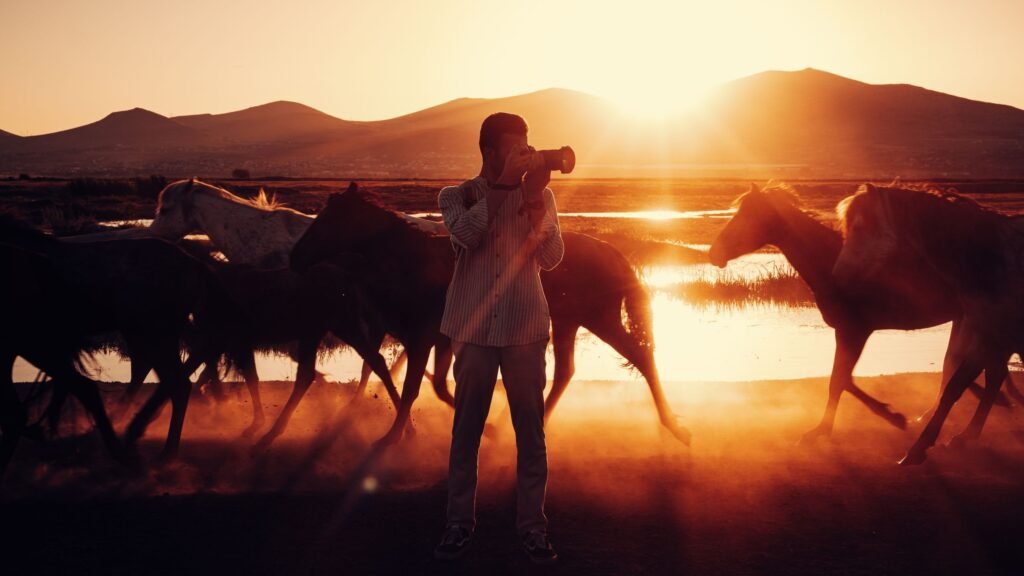
Equine photography is a distinct skill. Photographers who are excellent with people are not automatically good with horses, and a horse that is bored, hot or frightened will not produce the images you were hoping for.
A photographer who understands equine body language knows when to stop, how to get an ear forward without a plastic bag on a stick, and when a horse has had enough. That knowledge shows in the results more than the camera does.
Bring a handler. Have the horse clean and the tack ready before the photographer arrives — you are paying for their time, not their patience. Schedule for early morning or the hour before sunset, when the light is kind and the flies have eased.
A sales advert, a competition record and a portrait of a horse you are about to lose are three different jobs. Sales images need honest conformation shots taken square from the side, in flat light, plus clear video. Competition photography is a specialism of its own, dependent on shutter speed, position, and knowing where the horse will be a second from now. Portraiture allows atmosphere and shallow depth of field. Ask which of these the photographer does most, then look for that specific work in the portfolio.
Bathe the day before rather than the morning of, so the coat settles and any shampoo residue has gone. Pull or tidy the mane a few days ahead for the same reason. Clean tack properly and check the browband and noseband sit straight, because crooked tack shows in every frame and is difficult to fix afterward. Bring fly spray, a towel, and a second halter if you want changes.
Horses give roughly forty minutes of genuine attention before they start switching off, which is why the earliest frames are often the best ones. Shoot the images that matter most first rather than saving them for the end. Let the horse graze between setups. And accept the weather: overcast light is kinder than midday sun, and a photographer who suggests rescheduling for better conditions is protecting your investment rather than being difficult.
Deliverables, turnaround time, usage rights, whether you get high-resolution files, and what happens if weather forces a reschedule.
Usually the photographer retains copyright and licenses use to you. If you need commercial rights — for a sales advert, say — negotiate that upfront.
Typically one to three hours depending on the number of horses, outfit changes and locations. Horses tire; so do handlers.
Almost always. Someone needs to hold, set up and get the ears forward while the photographer works.
Related: the new horse owner checklist.
Related: choosing your first horse.
General information only. Horse Care Finder provides practical, educational guides for horse owners. This content is not a substitute for professional veterinary, medical, legal or other qualified advice. Any prices shown are general estimates that vary by location, provider and circumstances. See our Editorial Policy and Disclaimer.
Deliverables, turnaround time, usage rights, whether you get high-resolution files, and what happens if weather forces a reschedule.
Usually the photographer retains copyright and licenses use to you. If you need commercial rights — for a sales advert, say — negotiate that upfront.
Typically one to three hours depending on the number of horses, outfit changes and locations. Horses tire; so do handlers.
Almost always. Someone needs to hold, set up and get the ears forward while the photographer works.