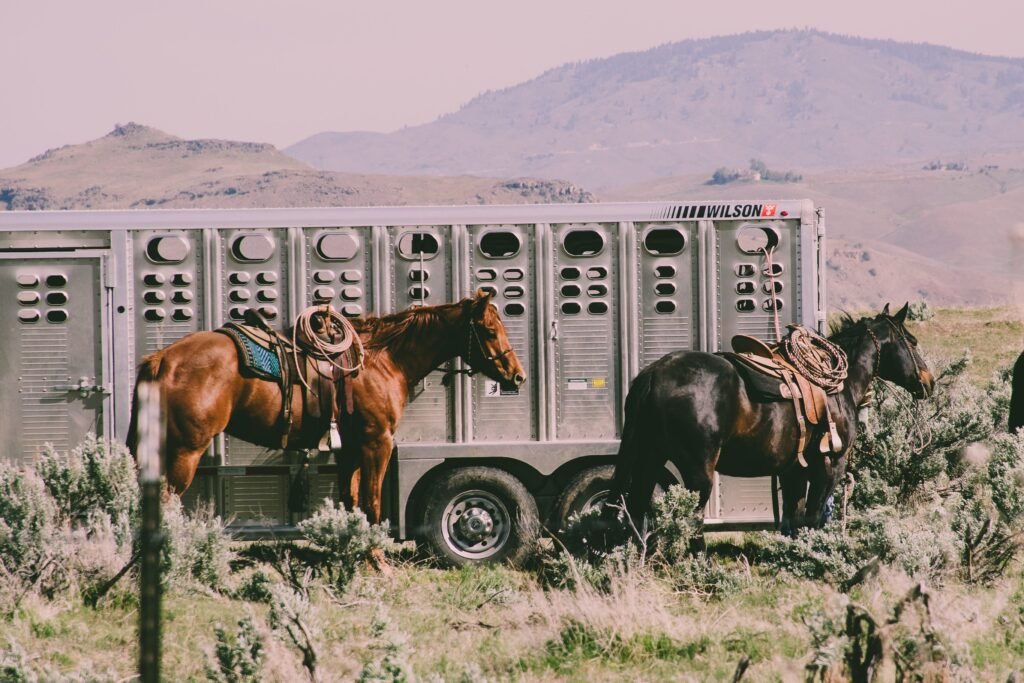
Most hauling problems are preventable, and most of the prevention happens before the horse is loaded.
Interstate travel generally needs a current health certificate and a negative Coggins. Requirements vary and change. Arrange these with your vet well before travel, not the night before.
Offer water and check the horse roughly every four hours. Drive as if there is a full glass of water on the dashboard — gradual acceleration, early braking, wide turns. A horse is standing on a moving platform, balancing continuously.
Trailers get hot quickly, particularly at a standstill. Keep air moving. Dehydration and the stress of travel are a recognised combination behind post-transport colic and respiratory disease, so hydration on arrival matters as much as on the road.
Generally a current health certificate and a negative Coggins test. Requirements vary by state and change — confirm with your vet well in advance.
Opinions differ. Shipping boots protect against knocks but can slip. If your horse is not used to them, a trailer is not the place to introduce them.
Offer water and check the horse roughly every four hours. On journeys over about twelve hours, plan an overnight where the horse can get its head down.
Only on veterinary advice. Sedation impairs a horse’s ability to balance itself against the movement of the trailer.
Related: how to choose a transport company.
Related: how much horse transport costs.
General information only. Horse Care Finder provides practical, educational guides for horse owners. This content is not a substitute for professional veterinary, medical, legal or other qualified advice. Any prices shown are general estimates that vary by location, provider and circumstances. See our Editorial Policy and Disclaimer.
Generally a current health certificate and a negative Coggins test. Requirements vary by state and change — confirm with your vet well in advance.
Opinions differ. Shipping boots protect against knocks but can slip. If your horse is not used to them, a trailer is not the place to introduce them.
Offer water and check the horse roughly every four hours. On journeys over about twelve hours, plan an overnight where the horse can get its head down.
Only on veterinary advice. Sedation impairs a horse's ability to balance itself against the movement of the trailer.