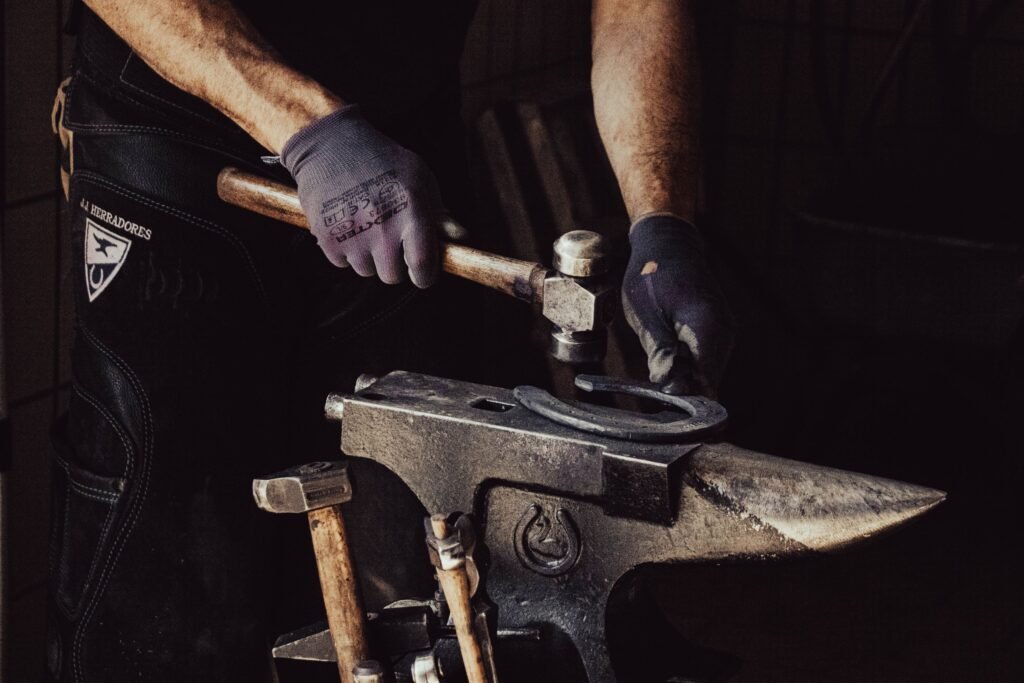
Your farrier sees your horse more often than almost anyone else on your care team — every five to eight weeks, year after year. That regularity means a good one quietly prevents problems, and a poor one quietly creates them.
Trimming is not just shortening a hoof. It is managing angles, balance and breakover so the foot loads correctly and the limb above it stays sound. A farrier who understands that will talk about your horse’s whole way of going, not just its feet.
Chronic lateness, rough handling, defensiveness when questioned, blaming the horse for everything, or unwillingness to coordinate with your vet. A farrier who says every previous farrier ruined the horse is rarely the exception they claim to be.
Pay promptly, have the horse caught and clean, provide a dry level place to work, and do not cancel casually. Good farriers ration their time toward clients who make the job easy.
It is a useful signal, not a guarantee. Certification through a recognised body shows formal training and testing. Plenty of excellent farriers are uncertified and plenty of certified ones are unremarkable. Use it as one input.
Ask your vet, your barn manager and other owners at your yard. Good farriers are usually full and grow by referral rather than advertising.
Say so upfront. Therapeutic and corrective work is a different skill from routine trimming, and a farrier who does not do it should tell you so.
For any lameness or corrective case, yes. The best outcomes come when they are looking at the same radiographs and agreeing on a plan.
Related: why horses need shoes.
General information only. Horse Care Finder provides practical, educational guides for horse owners. This content is not a substitute for professional veterinary, medical, legal or other qualified advice. Any prices shown are general estimates that vary by location, provider and circumstances. See our Editorial Policy and Disclaimer.
It is a useful signal, not a guarantee. Certification through a recognised body shows formal training and testing. Plenty of excellent farriers are uncertified and plenty of certified ones are unremarkable. Use it as one input.
Ask your vet, your barn manager and other owners at your yard. Good farriers are usually full and grow by referral rather than advertising.
Say so upfront. Therapeutic and corrective work is a different skill from routine trimming, and a farrier who does not do it should tell you so.
For any lameness or corrective case, yes. The best outcomes come when they are looking at the same radiographs and agreeing on a plan.