If there’s one principle nearly every equine nutritionist agrees on, it’s this: forage comes first. A horse’s gut is built to process a steady trickle of fiber all day, not big meals of grain. Get the hay right and most of the rest of feeding falls into place.
Here’s how to build a program around forage — and figure out when (and whether) you actually need to add anything.
Horses evolved grazing 16+ hours a day. Their digestive system depends on near-constant fiber to keep things moving and to buffer stomach acid. Skimp on forage and you invite ulcers, colic and stable vices. As a rule of thumb, a horse eats around 1.5–2% of its bodyweight in forage daily — for a 1,000-lb horse, that’s roughly 15–20 lbs of hay. Use our Hay & Forage Calculator to get your own horse’s specific daily range.
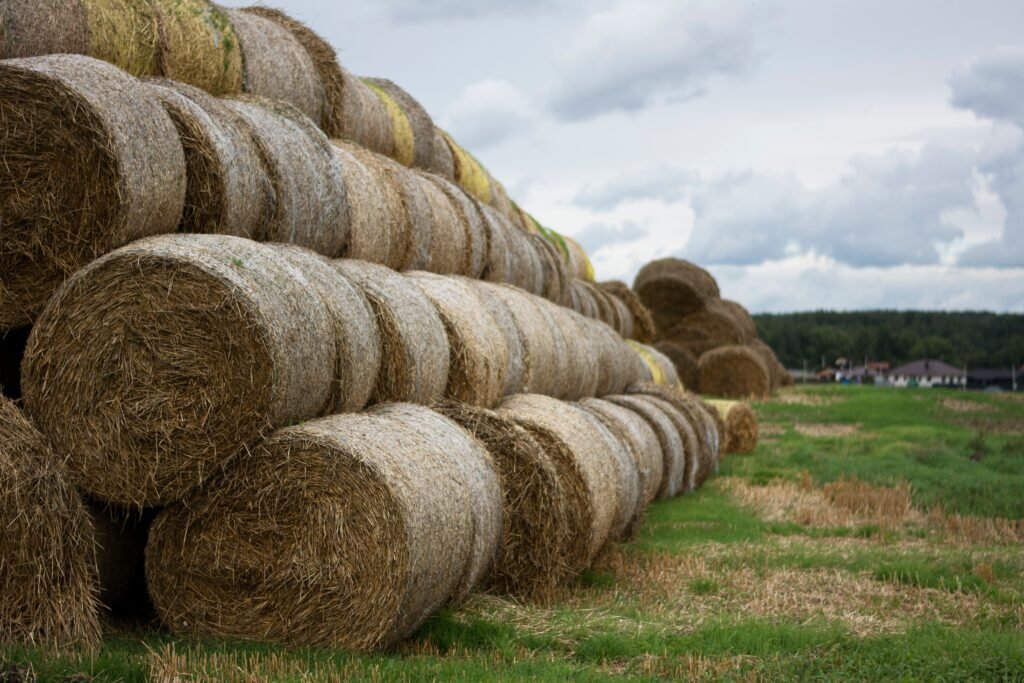
You can learn a lot by eye and hand: good hay is green-ish, smells sweet, is free of dust and mold, and isn’t full of coarse stems or weeds. But looks only go so far — a hay analysis tells you the actual protein, sugar and mineral content. For easy keepers, metabolic horses or anyone feeding a lot of one hay source, it’s well worth the small lab fee.
Many horses in light work need little more than good hay plus a vitamin-mineral balancer to fill nutritional gaps. Add concentrated feed when forage alone can’t meet energy needs — hard-working horses, hard keepers, seniors, broodmares. The mistake is reaching for the grain scoop by default; start with forage and add only what the horse actually needs.
The equine gut hates surprises. Any change — new hay, more grain, a different supplement — should be phased in over a week or more. Sudden changes are a classic colic trigger. Consistency, day to day, is genuinely one of the kindest things you can do for your horse’s digestion.
Roughly 1.5–2% of bodyweight per day — about 15–20 lbs for a 1,000-lb horse. Adjust for workload, weight and whether pasture is part of the picture.
Not always, but it’s valuable if you feed a lot of one hay, have an easy keeper or metabolic horse, or want to balance the diet precisely. It’s a small cost for real clarity.
Many can thrive on good forage plus a vitamin-mineral balancer. Grain becomes necessary mainly when energy demands outstrip what forage provides.
Over at least a week, ideally longer for big changes. Gradual transitions protect the gut and help prevent colic.
Related: how much a bale of hay costs.
General information only. Horse Care Finder provides practical, educational guides for horse owners. This content is not a substitute for professional veterinary, medical, legal or other qualified advice. Any prices shown are general estimates that vary by location, provider and circumstances. See our Editorial Policy and Disclaimer.
Roughly 1.5–2% of bodyweight per day — about 15–20 lbs for a 1,000-lb horse. Adjust for workload, weight and whether pasture is part of the picture.
Not always, but it's valuable if you feed a lot of one hay, have an easy keeper or metabolic horse, or want to balance the diet precisely. It's a small cost for real clarity.
Many can thrive on good forage plus a vitamin-mineral balancer. Grain becomes necessary mainly when energy demands outstrip what forage provides.
Over at least a week, ideally longer for big changes. Gradual transitions protect the gut and help prevent colic.