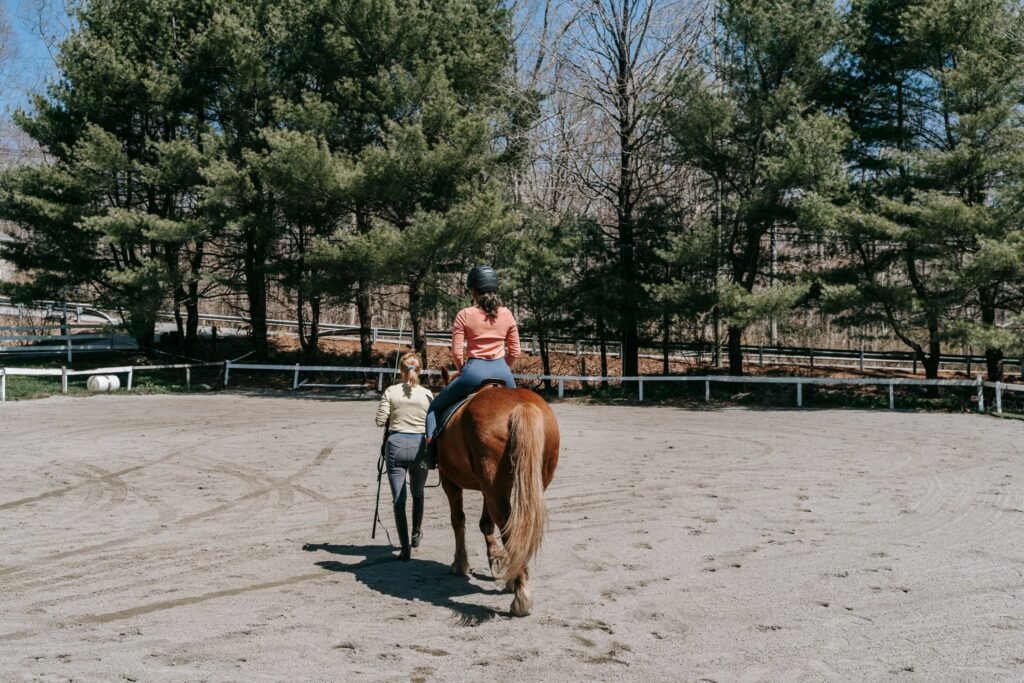
Whether it is for you or your child, the first riding lessons set the tone for everything that follows. A good start builds confidence and safe habits. A rough one can put someone off horses for life.
For beginners the priorities are safety, patience and suitable lesson horses — calm, well-schooled animals that forgive a learner’s mistakes. A smart arena matters far less than an instructor who is good with nervous beginners.
Ask to observe a beginner lesson before booking. Listen to how the instructor corrects a mistake. Encouraging and specific is what you want. Sarcasm and shouting are not teaching styles, whatever anyone tells you.
Riding is a skill sport. There will be awkward, frustrating lessons. The early goal is not to look good; it is to become safe, balanced and confident. The rest follows.
Many programs start around six or seven, but it depends far more on the child’s attention span and physical confidence than on the number.
Groundwork, safety, and time at the walk. If a beginner is trotting in lesson one, that is a warning sign rather than fast progress.
No. Good beginner programs use schooled lesson horses, which is safer and cheaper than learning on your own green horse.
Once a week maintains, twice builds. Consistency matters more than intensity in the early stages.
General information only. Horse Care Finder provides practical, educational guides for horse owners. This content is not a substitute for professional veterinary, medical, legal or other qualified advice. Any prices shown are general estimates that vary by location, provider and circumstances. See our Editorial Policy and Disclaimer.
Many programs start around six or seven, but it depends far more on the child's attention span and physical confidence than on the number.
Groundwork, safety, and time at the walk. If a beginner is trotting in lesson one, that is a warning sign rather than fast progress.
No. Good beginner programs use schooled lesson horses, which is safer and cheaper than learning on your own green horse.
Once a week maintains, twice builds. Consistency matters more than intensity in the early stages.